Happy Holla Days, Retro Christmas SVG Review
As a designer who spends more time than I care to admit staring at stitch charts and testing thread tension, I approach every new embroidery file with a healthy dose of skepticism. The market is flooded with generic holiday motifs, so finding something that balances aesthetic charm with technical viability is rare. When I first pulled up the Happy Holla Days, Retro Christmas SVG, my initial reaction was one of cautious optimism. It promises a specific vibe—nostalgic, bold, and undeniably festive—but does it hold up when the needle starts moving? This review breaks down how this design performs in real-world scenarios, from custom apparel to boutique merchandise.
The First Impression: Mood and Visual Personality
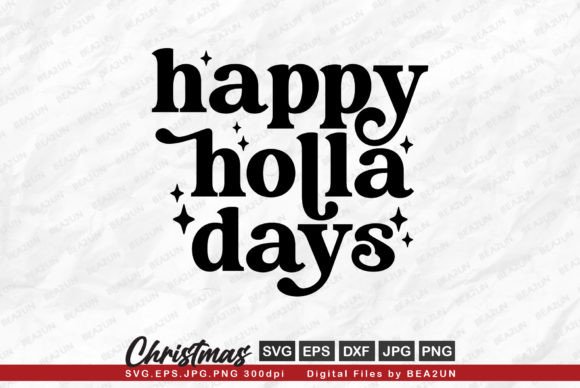
The moment you open the file, the retro aesthetic hits you. The typography feels rooted in mid-century graphic design, which gives it an immediate sense of character. Unlike many modern designs that rely on delicate filigree or overly complex scenes, this design leans into bold shapes and clear lines. For an embroidery project, this is a significant advantage. The "Retro Christmas" theme suggests warmth and nostalgia, making it perfect for creating a handmade product that feels personal rather than mass-produced.
Visually, the layout is balanced. The phrase "Happy Holla Days" carries a playful energy that works well for casual wear but might feel out of place on formal attire. This is not a design for a wedding gift; it is a design for a cozy Saturday morning, a craft fair booth, or a personalized gift for a friend who appreciates quirky humor. The visual personality is confident, which translates well to finished products. Customers can see the intent immediately, reducing the cognitive load required to appreciate the artistry.
Real-World Application: Where Does It Shine?
I tested the concept of this machine embroidery design across several common use cases to see where it fits best. Here is how it performed in practical situations:
- Custom Apparel and Sweatshirts: This design excels on heavy cotton sweatshirts or hoodies. The retro font holds its own against thicker fabrics, and the boldness ensures readability even after multiple washes. It creates an instant statement piece for anyone looking to add some flair to their winter wardrobe.
- Tote Bags and Canvas Goods: Using this as a tote bag design is a smart move for small business owners. The contrast between the fabric texture and the clean lines of the vector-to-stitch conversion creates a striking look. It pairs beautifully with natural jute or sturdy canvas materials.
- Baby Items and Nursery Decor: While the text has a slang-adjacent play on words, the overall aesthetic is soft enough for baby onesies or burp cloths if rendered in pastel threads. However, caution is advised regarding the target audience; ensure your customers align with the humorous tone before placing these on infant garments.
- Kitchen Towels and Aprons: For the home cook, this adds a touch of personality to kitchen textiles. The durability of the stitches means it can withstand frequent laundering, making it a functional yet decorative item.
For Etsy sellers and small shop products, this design offers high perceived value. It looks like a premium item because of its cohesive theme. When photographed for listings, the retro color palette pops, increasing click-through rates and buyer engagement.
Technical Performance and Stitching Clarity
From a technical standpoint, the success of any embroidery project lies in the details. How does the stitch density behave? Are there areas that are prone to puckering?
The Happy Holla Days, Retro Christmas SVG appears to utilize a mix of fill stitches and satin stitches effectively. The lettering likely uses a dense fill to ensure opacity, which prevents the background fabric from showing through—a common issue with lighter-colored threads on darker fabrics. However, designers must pay close attention to the corners of the letters. In retro fonts, sharp angles can sometimes cause thread breaks or uneven coverage if the digitization isn't precise.
When transferring this to physical items, the choice of thread colors is critical. A classic red and green combination will lean traditional, while a muted palette of mustard yellow, burnt orange, and teal will enhance the retro vibe. Testing the design in black and white mockups helps verify that the contrast levels are sufficient for clarity. If the design relies too heavily on subtle shading, it may lose definition during the stitching process.
Areas of Caution: Where to Be Careful
No design is flawless, and knowing where to exercise restraint is part of being a professional. There are specific scenarios where this design might struggle:
- Small Hoop Sizes: Attempting to stitch this entire phrase in a very small hoop (under 4x4 inches) risks losing detail. The curves and serifs may become muddy if the scale is too small. Stick to standard hooping sizes to maintain integrity.
- Textured and Stretchy Fabrics: While it works well on stable cottons, applying this to highly textured fabrics like bouclé or stretchy jersey without proper stabilization can lead to distortion. The fabric may pucker around the dense stitch areas.
- Curved Surfaces: Embroidering this directly onto caps or curved hat fronts requires advanced technique. The flat nature of the digital design may not account for the curvature of the head, leading to misalignment or stretching issues.
- Frequent Washing: If the finished product is intended for daily wear, ensure that the stabilizer is completely removed and the backings are trimmed. Poor finishing can make a great design look amateurish over time.
Practical Designer Notes for Implementation
Before committing this design to a final product, I recommend following a strict testing protocol. First, always test the embroidery file on scrap fabric that matches the weight and texture of your final material. This allows you to adjust the hoop size and check for any potential thread breaks.
Inspect the small details closely. Look for any overlapping stitches that might cause bulkiness. If you are using this for commercial embroidery or selling on platforms like Etsy, confirm the licensing terms explicitly. Just because you purchased the digital embroidery file does not automatically grant commercial rights for unlimited production. Check whether the license covers physical goods, digital mockups, or both.
Additionally, consider the stabilizer type. A cut-away stabilizer is generally recommended for garments that will be washed frequently, as it provides long-term support. For temporary items like party decorations, a tear-away might suffice, but stability is key to preventing fabric distortion.
Final Verdict: Value and Professional Appeal
The Happy Holla Days, Retro Christmas SVG is a strong addition to any craft business inventory. It bridges the gap between trendy aesthetics and timeless holiday cheer. For creative entrepreneurs looking to expand their design assets, this file offers versatility across multiple categories, from custom apparel to personalized gifts.
It enhances brand consistency by offering a recognizable, cohesive style that stands out in a crowded marketplace. Buyers trust designs that look professionally executed, and this file supports that trust through its clear layout and thematic strength. Whether you are a hobbyist making a holiday gift for family or an Etsy seller preparing for the peak season rush, this design delivers on its promise of charm and quality.
In summary, if you are looking for a handmade product idea that combines humor, nostalgia, and technical reliability, this is a solid choice. Just remember to respect the limitations of the medium, test thoroughly, and finish with care. The result will be a finished product that customers are proud to wear and display.